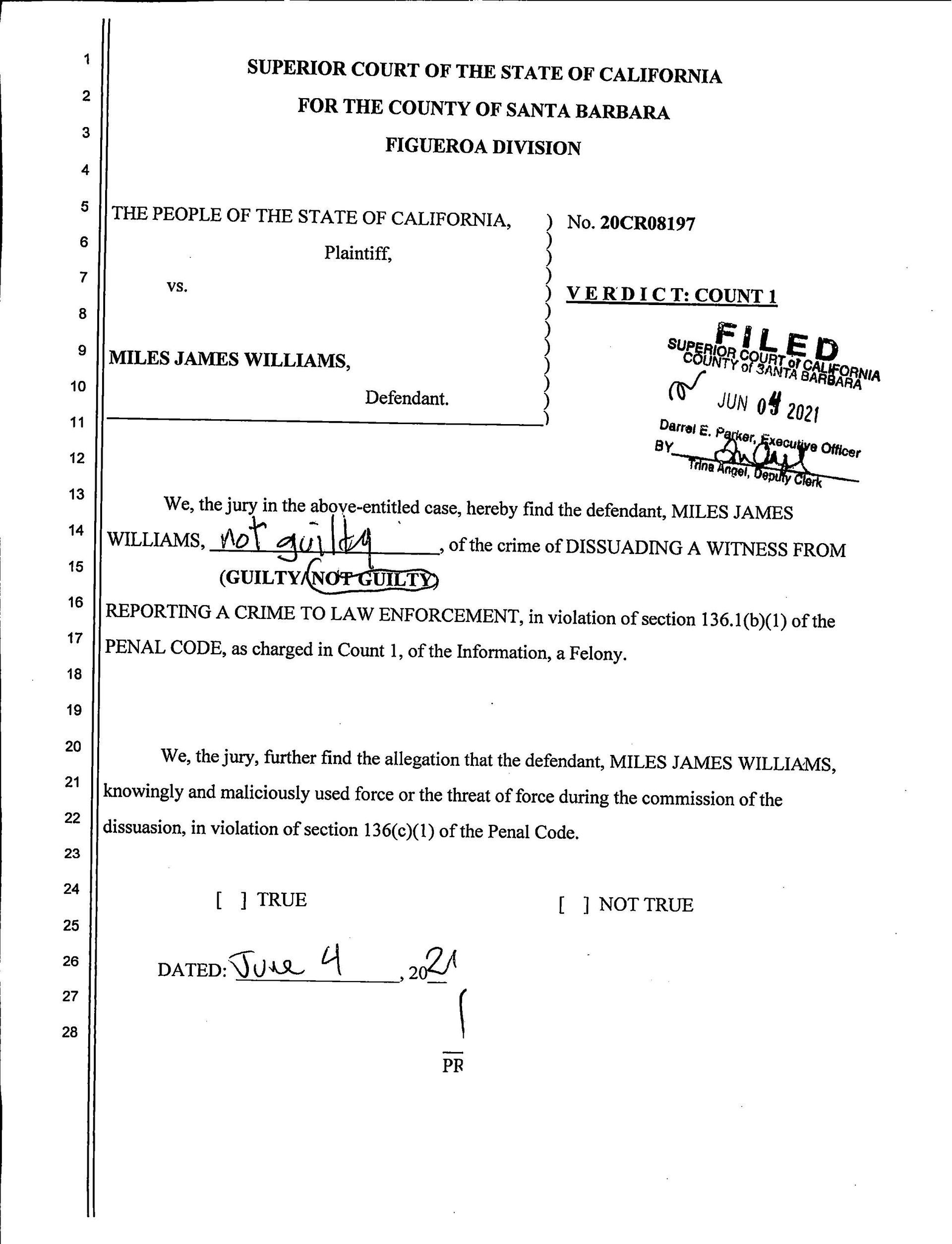
Miles W. 20CR08197 on June 4, 2021 he was found NOT guilty of all felony charges which included a charge that is a strike, winning all strike charges is considered an absolute victory and winning all felony charges is even more so
This is a jury trial that Addison won with acquittals on all the felony charges
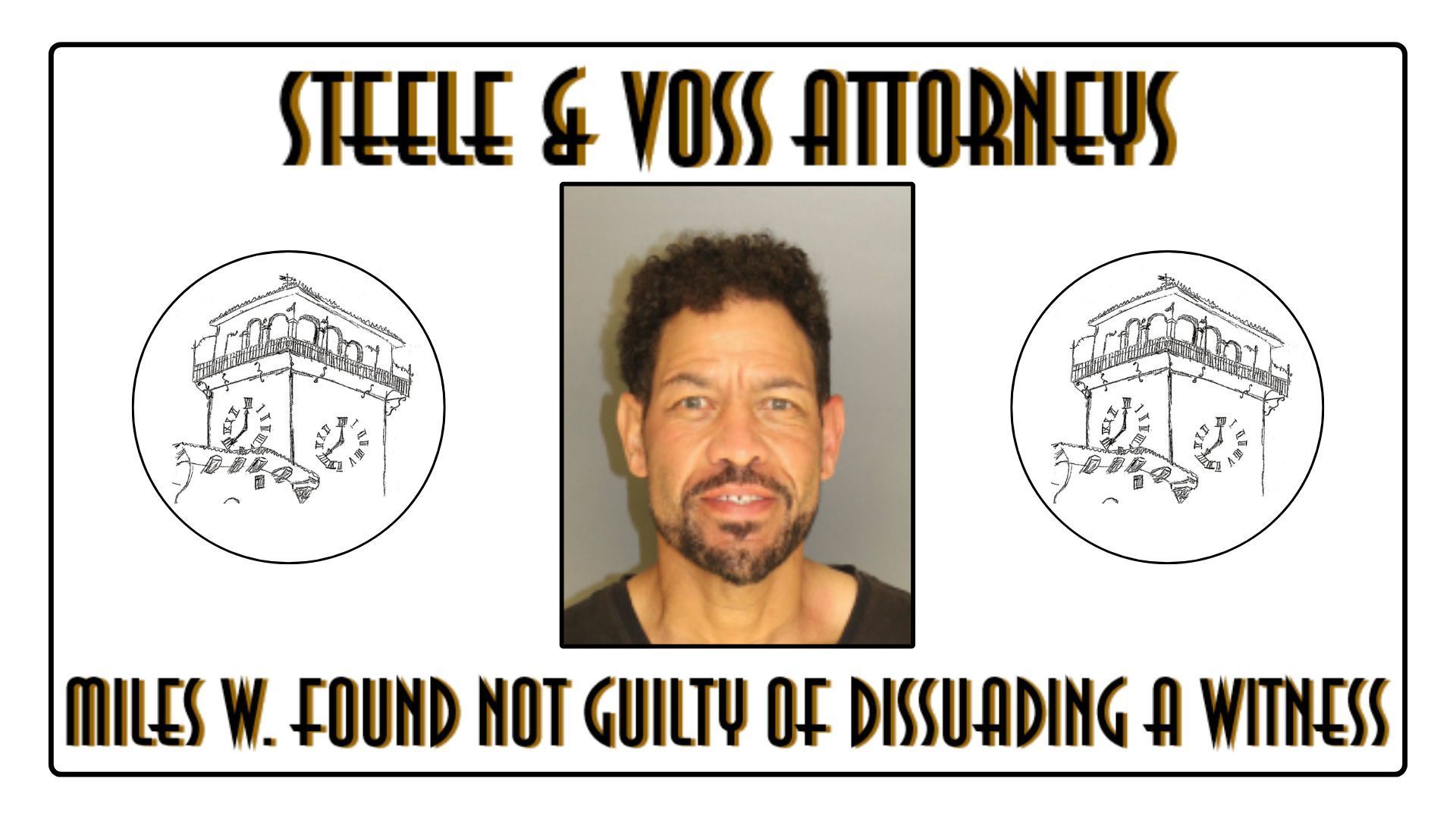
- Charges: Dissuading a witness (Penal Code § 136.1(b)(1)) with a special allegation of force or threat (Penal Code § 136.1(c)(1)), vandalism (Penal Code § 594(b)(1) and shoplifting (Penal Code § 459.5(a)).
- Exposure: Miles was facing three years and eight months in prison.
- Outcome: Miguel was acquitted of the shoplifting charge because of a granted Penal Code § 1118.1 motion, he was found not guilty of dissuading a witness by the jury, because of that not guilty verdict the special allegation of force or threat was not reached, he was found guilty of vandalism, but because the special allegation of the amount of damage being over $400.00 was found not true, by operation of law it was only a misdemeanor conviction of Penal Code § 594(b)(2)(A). The real victory in this case was miles not just coming away without a felony conviction, but winning the dissuading charge which is a strike. Miles was homeless with an extensive record of misdemeanor and low grade felony convictions. If he had been convicted of the strike, every time he time he got a new low grade felony he would be probation ineligible, get the double the term and have to serve 80% of the term. For example with this case if he had had a strike prior, instead of facing three years eight months at 50%, he would have been facing seven years four months at 80% and he would have been probation ineligible, which means that the judge could not grant him probation and would have had to send him to prison. Saving Miles from a strike was critical.
This case was an overwhelming victory. It's always considered a defense victory when a client is charged with a strike offense and comes away without a strike. It's a huge victory when a client is charged with a strike felony and comes away with only a misdemeanor conviction. It's also a victory when after trial, instead of the client getting sentenced to prison, he's released from jail with credit for time served. All three of those routes to victory happened in this case.
This was a true pandemic trial. It was one of the first in Santa Barbara County after the courts were shut down by the pandemic in March of 2020. All the participants wore masks, which puts the defense at a tremendous disadvantage because the client and lawyer cannot see the jurors' facial expressions during jury selection and during the trial. Addison litigated the issue and made a motion for transparent masks for the jurors. That motion was denied. The witness box was enclosed in a transparent barrier and the was a large transparent barrier between the defense and prosecution sides of the counsel table. The majority of the jurors did not sit in the jury box. Only three jurors sat in the jury box spaced six feet apart. The rest of the jurors and the alternates were seated in the gallery, behind the lawyers, spaced six feet apart. There was only one bench in the very back for the public. Again this was a huge disadvantage to the defense because Addison could not see the jury to gauge their reactions during the trial. However no amount of making motions or objecting could change the way the trial was conducted in pandemic conditions. There was one advantage, the jury selection was conducted very small groups, so it was almost individual voir dire, something that is normally only granted in capital murder cases, and even then rarely, This is called Hovey voir dire (Hovey v. Super Court (1980) 28 Cal.3d 1) and is advantageous to defense.
Miles was homeless and had gone into a CVS to buy a candy bar. He was immediately suspected of shoplifting and kicked out of the store. The shoplifting charge was dismissed by the judge in the middle of the trial because there was no evidence of despite Miles time in the store all being on video. Miles became frustrated after being kicked out of the store. Moments after he was kicked out he returned and pulled the theft detection sensor out of the ground and threw outside. He then went back outside. The store employee locked the door behind him so he couldn't go back in. He then did a stomping motion toward the employee, who was on the other side of the locked glass door, which the employee perceived as Miles attempting to dissuade her from calling the police. The entire incident was on video.
The stomping motion was the most critical part of the trial. If the jury believed that the stomping motion was done with the intent to dissuade the employee from calling the police he would be convicted of a strike felony, and with his long record, even though it was all misdemeanors or minor felonies, he would surely have been sent to prison, and even if he was granted probation, being homeless, suffering from addiction and mental illness (all of which came out in the trial), it would have been very unlikely that he could successfully complete felony probation and would end up in prison anyway.
The jury found Miles not guilty of dissuading a witness, they found that the vandalism of the theft sensor device was not more than $400.00 damage which made the vandalism a misdemeanor by operation of law. That means that he only suffered a conviction for misdemeanor vandalism. He had been arrested at the height of the pandemic when the courts were closed and in very limited use. So despite having never waived his right to a speedy trial, it took almost six months to get his case to trial. The California Supreme found that speedy trial delays due to the pandemic were not unconstitutional. He was given credit for time served for the vandalism and released from jail.